A Love-Led Approach to Teaching
On perseverance, presence, and the transformative power of choosing love in the midst of life’s most difficult moments.
There is a particular kind of courage required of those who work with young children — not the loud, triumphant kind, but the quiet, steady kind. The courage to remain open when everything in the room (and in you) wants to close. This post is an invitation to explore what it truly means to lead with love, not as sentiment, but as a transformative pedagogical force.
1. Love Is Not Passive — It Is an Active Practice of Inner Alchemy
In early childhood settings, we speak often about creating environments of warmth and safety. But what happens when the environment itself is difficult — when we face a child’s unregulated rage, a family’s contempt, institutional injustice, or simply the accumulated weight of exhaustion? The reflexive response is often to shut down, to protect, to withdraw.
Choosing love in those moments is not about being “nice” or pretending the difficulty isn’t real. It is about something far deeper and more demanding: refusing to let the external environment determine the quality of your inner world. This is what we might call the alchemy of resilience.
When educators respond to hardship with the same energy that created the hardship — frustration met with frustration, contempt met with withdrawal — the cycle simply continues, often passing its pattern on to the very children we are trying to protect. Love, chosen deliberately in those moments, acts as a circuit breaker. It does not excuse injustice. It does not deny pain. It redirects the energy.
The hallmark of a truly evolved practitioner is the ability to love despite the struggles, setbacks, and pain.
Many educators who have walked this path report something remarkable: when they commit to that choice — even reluctantly, even imperfectly — something deeper takes over and does the necessary work. What follows is often awe and a profound sense of gratitude: awe at discovering a strength they didn’t know they had, and gratitude for howremarkable things turned out.

2. The Seed Metaphor: Understanding Growth Through Darkness
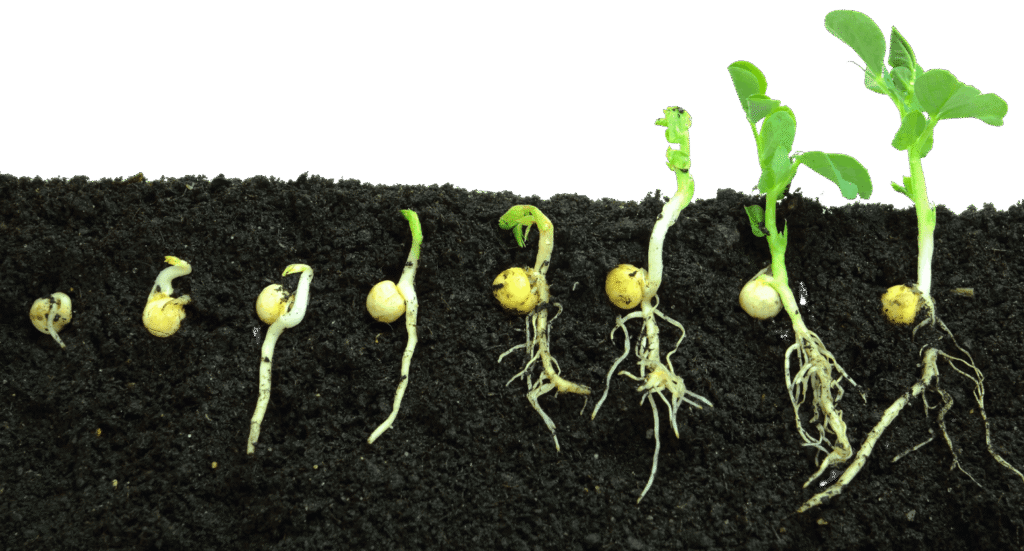
One of the most powerful frameworks we can carry into early childhood practice is the story of the seed. It is a story not of comfort, but of profound transformation — and it begins, always, in the dark.
A seed placed in the soil finds itself in a tight, dark, messy space. Without that pressure, without the moisture, the shell never cracks. And the shell must crack. Not because something has gone wrong, but because the life inside has grown too large for its container.
The Shell
The ego’s protective layer — the part of us (and our children) that avoids, deflects, and resists change to stay “safe.”

The Pressure
Life’s difficulties — conflict, loss, transition, big emotion. Not enemies of growth, but the very water that makes swelling possible.

The Cracking
The “birth” — the moment the true self begins to emerge. It feels like an ending, but it is actually a first breath.
For young children, these “cracking” moments are everywhere: the transition from home to nursery, the arrival of a new sibling, a friendship ending, encountering failure for the first time. To the child — and often to the adults around them — these look like breakdowns. The crying, the regression, the resistance.
But what if we could hold a different vision? What if, instead of seeing these moments as problems to fix, we learned to recognise them as the child outgrowing their current shell? The educator’s role, then, is not to stop the cracking but to hold the space around it with enough warmth and steadiness that the new growth has somewhere safe to reach.
Reflective Insight
Have you ever felt like you needed more space?
That sensation — the feeling of being squeezed too tightly by your circumstances, your role, or your identity — is often the soul outgrowing the ego. It is the same pressure the seed experiences in the soil. The discomfort is not a warning sign. It is an invitation to expand.
Understanding this in our own lives as practitioners is the first step toward holding it as a living truth for the children in our care. We cannot teach what we have not, in some measure, lived.
3. The Clay and the Potter: Accepting the Mess as the Work
There is a second metaphor that sits beautifully alongside the seed — and it is one that early childhood educators will find particularly resonant, because it lives in the very materials we place in children’s hands: clay.
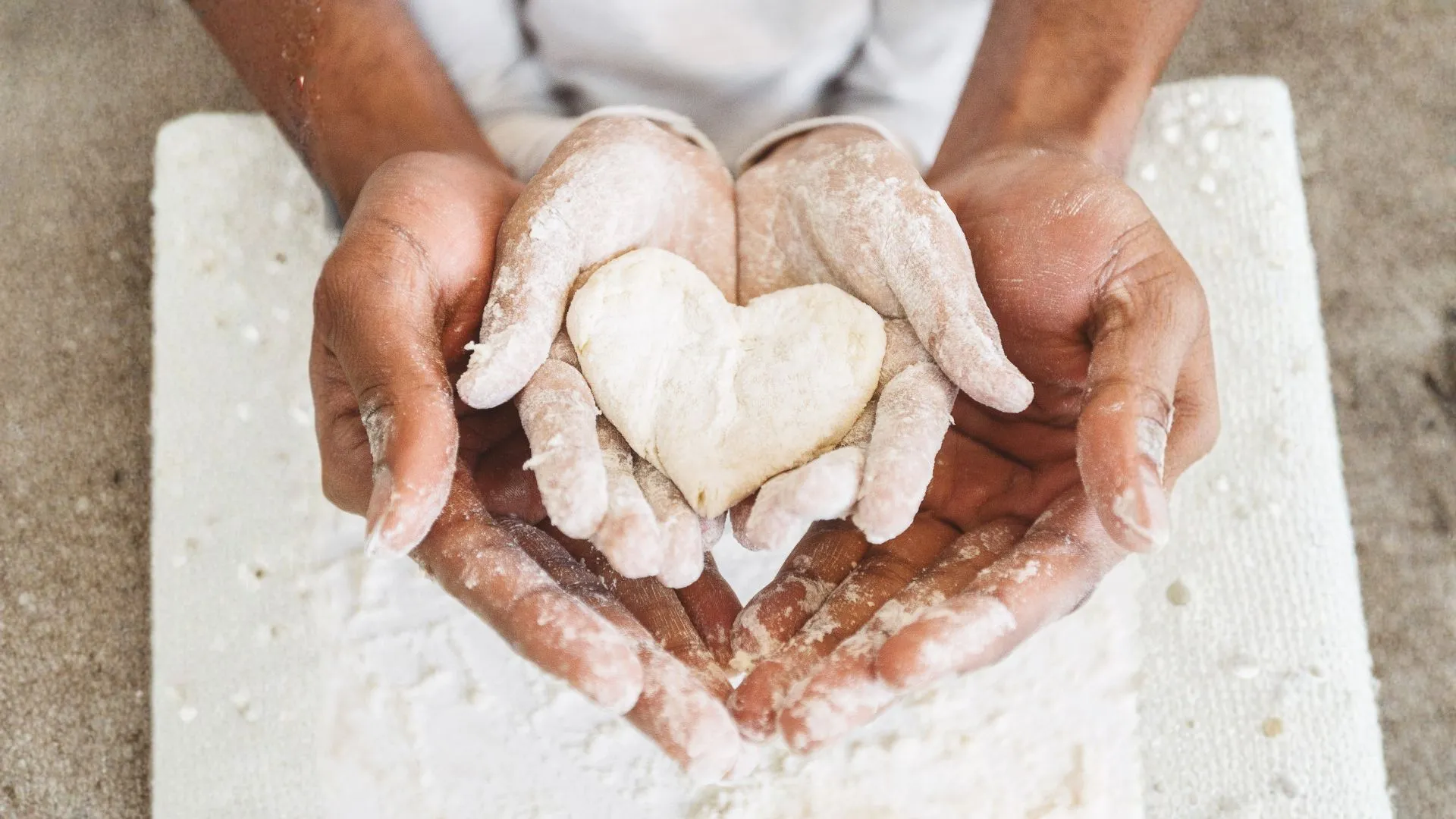
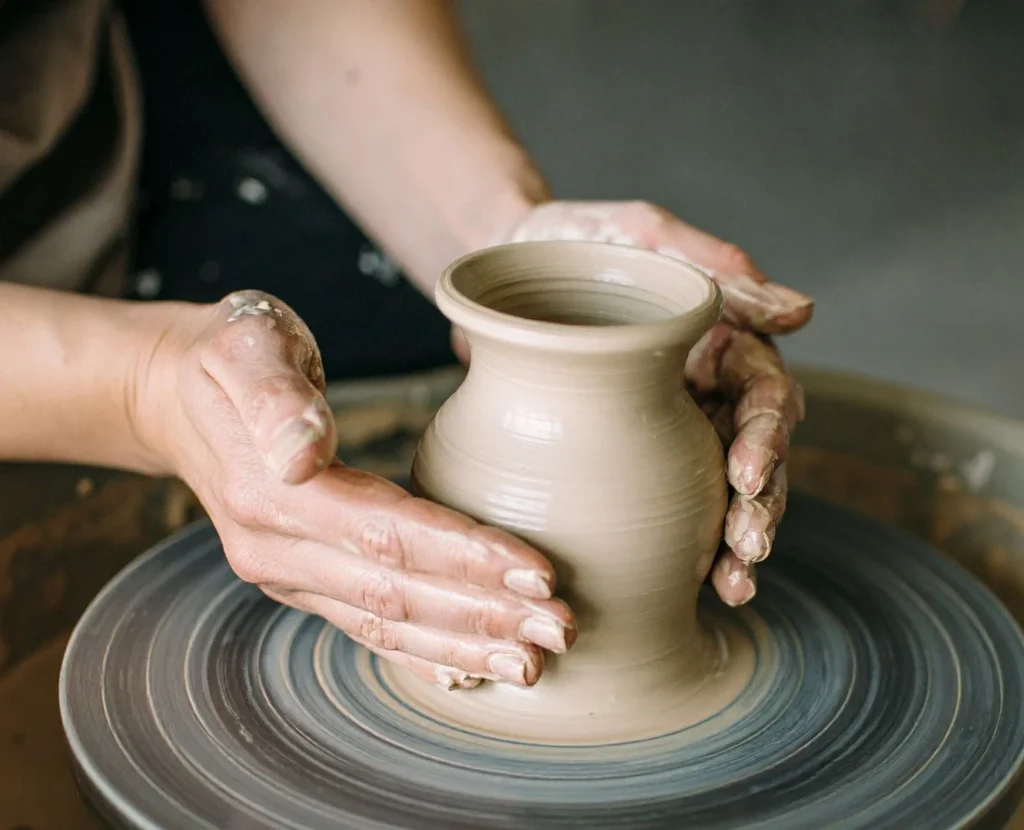
When we take clay into our hands to make something beautiful, our hands get dirty. That is not a side effect of the work. It is the work. You cannot transform a lump of clay into something useful and beautiful by staying clean, by keeping your distance, by observing from the edge of the room.
The same is true of transformative education. We are, in the deepest sense, potters — and the clay is the raw, difficult, sometimes beautiful and sometimes resistant material of a child’s whole developmental experience. The big emotions are the clay. The family histories are the clay. The sleepless nights and the grief and the confusion are the clay.
The injustice is the clay. It is heavy, cold, and messy. Love is the hand — the force that shapes the mess. The dirty hands represent the willingness to let your heart be touched by the experience, so that the world can end up more beautiful.
To “take the clay into our hands” means to accept — not resign ourselves to, but genuinely accept — that this is the material we have to work with right now. That acceptance is the moment transformation becomes possible. We stop trying to push away the wave and start building with it.
The hardest part, of course, is keeping our hands on the clay when the injustice — the unfairness of the situation, the exhaustion, the grief — makes us want to let go. And yet, those who stay report the same experience: a deep joy in the molding itself, regardless of what the finished piece looks like. The joy is in the doing. The awe is in discovering the strength you never knew you had.
The Lighthouse: On Being a Role Model Worth Following
In early childhood education, we know intuitively that children learn far more from who we are than from what we say. But this principle reaches further than we often acknowledge. It is not merely about modelling “good behaviour” in the observable sense — sharing, using kind words, being patient. It runs down to the roots of how we orient our inner life.
When we allow our true self — the love that exists beneath our own fear and reactivity — to lead our thoughts, our emotions, and our actions, we become something very specific for a child: a lighthouse.
A lighthouse does not stand on the shore and shout directions through a megaphone. It does not tell the ships what to do. It simply shines — steadily, reliably, from a fixed point — so that the ships can find their own way through the storm. The light does not move. That is what makes it trustworthy.
Inner Compass
Aligning Thought, Emotion, and Action
When we lead from love, we align all three: our thoughts shift from reactive judgment to curious inquiry (“what is making this child hurt so much?”); our emotions shift from victimhood to the quiet awe of the creator; and our actions become a form of molding — we help, build, and heal, undeterred by the mess.
Children who have at least one adult in their life who demonstrates this alignment — who stays kind when kindness is hard, who keeps going when things are messy, who does not let pain curdle into bitterness — are witnessing something of extraordinary value. They are watching, in real time, what it looks like to let the true self take the wheel. And in watching, they begin to understand, at the deepest level, that it is possible for them too.
We cannot tell a child “don’t be afraid.” We have to live the answer to fear in front of them. That is what being a role model truly means. Not perfection. Not the absence of difficulty. But the visible, embodied choice to continue creating beauty from the mess.

5. Resilience Is Not Toughness — It Is the Courage to Stay Open
There is a widespread misunderstanding of resilience in education — that it means becoming harder, less affected, more armoured. The goal, under this view, is to stop things from hurting.
But what the deepest traditions of human wisdom, and the most honest reflections of experienced practitioners, suggest is something entirely different: resilience is the capacity to remain open when everything is pressing you to close. It is a radical act. It is the willingness to work with the darkness rather than resist it.
Resisting darkness is like trying to push away a wave in the ocean. We exhaust ourselves, and the wave arrives anyway. Accepting the darkness — acknowledging “this is the material I have to work with right now” — is not the same as saying the darkness is good, or that the injustice is acceptable. It is the moment we stop running and start creating.
For early childhood educators, this has enormous practical implications. It takes very little energy to be cynical, to be burned out, to respond in kind to difficulty. It takes immense strength to stay empathetic when you are hurting, to maintain warmth when your warmth has not been returned, to hold space for a child’s storm when you are barely holding your own. That strength is not built by becoming more guarded. It is built by repeatedly choosing love — even imperfectly, even reluctantly — and discovering that something deeper and stronger than your fear was available all along.
For Your Practice
Five Invitations for the Love-Led Educator
- Name the Clay
When you encounter a difficult moment today — with a child, a family, or a colleague — pause and ask: “What is the clay here? What am I actually being invited to work with?” Simply naming it reduces reactivity and opens the space for creative response.- Reframe the “Cracking”
When a child is in the midst of a big emotional or developmental struggle, practice saying inwardly: “They are not breaking. They are hatching.” Notice what shifts in your body and in your response when you hold that frame.- Track Your Own Swelling
Keep a brief reflective journal of moments when you felt “squeezed” — professionally or personally. Look back over several weeks. What were you outgrowing? Where did the pressure eventually lead to expansion?- Shine Before You Speak
Before addressing a difficult situation with a child or family, take one full breath and ask: “Am I shining right now, or am I shouting through a megaphone?” The lighthouse doesn’t need to raise its voice. Presence and steadiness are the message.- Notice the Awe
After choosing love in a hard moment — however imperfectly — pause to notice what is there. Gratitude? Quiet strength? A sense of your own capacity? That awe is data. It is evidence that the true self was present. Write it down. It becomes your anchor for the next difficult moment.
The Dirt on Your Hands Is Not a Problem. It Is a Sign.
It is a sign that you are in the middle of making something. That you showed up. That you did not stay on the clean, safe side of the room.
The children in your care are watching what you do with the mess of real life. They are learning, every single day, whether it is possible to stay human in inhuman circumstances. Whether love is stronger than fear. Whether the cracking is an ending or a beginning.
You are not just teaching them new words and how to share a paintbrush. You are showing them — in every choice you make to stay open, to keep molding, to shine steadily through the storm — what an evolved human being looks like.
That is the most important lesson they will ever receive.

Klavdija Svet, author of Elevate to Educate
Elevate your teaching skills and stay ahead of the curve! Receive our monthly Insights, packed with professional development opportunities, classroom inspiration, and the latest trends in education. Don’t miss out on the chance to take your teaching to the next level. Subscribe now!